Year-end vision benefits reward patients who treat the plan documents like a workflow, not a coupon. The exam date, diagnosis code, hardware allowance, and FSA deadline all sit in different parts of the system, and one missed detail can move a claim from covered to denied.
The practical approach is sequential: confirm the benefit cycle, verify exam eligibility, update the prescription, then assign dollars to the eyewear or contact lens purchase that produces the highest real value.
The Mechanics of Annual Vision Coverage Expiration
How calendar-year resets actually work
Most employer-sponsored vision plans use a use-it-or-lose-it design. For calendar-year plans, unused allowances commonly reset just after midnight on January 1st. That timing matters because the reset does not preserve unused frame dollars, contact lens allowances, or unclaimed exam benefits from the prior year.

Benefits administrators often select calendar-year cycles because they are simpler to manage than individualized anniversary tracking. A single reset date reduces the administrative burden of monitoring each employee’s claim history, even though it creates a heavy patient rush in November and December.
Calendar-year versus rolling 365-day cycles
A rolling-year plan works differently. Benefits replenish only after a full 365-day interval from the exact date of the previous claim. That distinction creates one of the most common year-end errors: assuming a “12-month” frequency limit means “once per calendar year.”
Risk Factor: If the previous full exam occurred 11 months and 20 days ago, a plan with a strict 12-month limit may deny the entire routine exam claim, even if the calendar year is about to end.
The safer method is to check the date of the last paid exam before booking. A front desk estimate helps, but the plan portal or benefits card usually gives the cleanest answer.
The financial effect of unused allowances
Unused vision benefits are not a refund mechanism. The patient has already contributed through payroll deductions or employer benefit structures, and the plan’s unused allowances disappear when the benefit cycle closes.
That does not mean every patient should buy something unnecessary in December. It means patients should identify whether they still need a prescription update, replacement lenses, backup eyewear, prescription sunglasses, or contact lens supply before the plan resets.
Analyzing Benefit Allowances and Coverage Limitations
Routine vision coverage is not medical eye care
Vision insurance usually covers routine refractive care: measuring the prescription, assessing visual acuity, and supporting eyewear or contact lens purchases. Medical eye care follows a different billing path.
Billing coordinators route claims by analyzing the primary diagnosis code listed by the optometrist. If the code indicates refractive error, such as myopia, the claim typically routes through the routine vision plan. If the primary diagnosis relates to dry eye syndrome, cataracts, or another medical condition, routine vision plans generally deny that exam and the claim shifts to major medical insurance.
This is not a clerical technicality. It changes the patient’s copay, deductible exposure, and sometimes whether the visit counts against a routine vision exam frequency limit.
Frame, lens, and contact lens allowances
Standard retail frame allowances often sit in the $130 to $150 range. The number looks simple until the patient tries on a frame priced just above the cap.
A frame that exceeds the allowance by even a small amount can produce a noticeably different out-of-pocket total because many carriers apply a flat discount percentage only to the overage amount. Staying exactly under the cap may cost less than choosing a frame priced just $5 above it, depending on the carrier’s discount rules and the retailer’s pricing structure.
Critical Insight: The allowance cap is not merely a discount. It is a boundary line that determines which dollars receive full coverage and which dollars become patient responsibility.
Frequency limits need exact wording
Patients should read the frequency language literally. “One exam per 12 months” is not the same as “one exam per calendar year.” The first version depends on the date of the last exam. The second version depends on the plan year.
The same logic can apply to frames, prescription lenses, and contact lens benefits. Before selecting hardware, confirm whether the plan permits both glasses and contacts in the same year, or whether choosing one category exhausts the other.
Strategic Timing for Eye Examinations
Why December appointments disappear quickly
Fourth-quarter scheduling pressure is predictable. Routine exam wait times can expand to about 18 to 24 days in late November and December, especially in clinics with evening and weekend hours.
In clinical practice, clinics have tried to protect December access by blocking dedicated walk-in slots. That approach often creates unbillable downtime when patients do not arrive, so many offices now rely more heavily on automated waitlists and short-notice confirmations.
Those notifications move fast. Some systems require patient confirmation within a 15 to 30-minute window before the slot passes to the next person.
Coordinate routine and medical concerns before the visit
A patient who needs a prescription update and also has symptoms such as persistent dryness, sudden floaters, eye pain, or cataract concerns should call before scheduling. The clinic can determine whether the visit should be routine, medical, or split into separate appointments.
This step prevents an unpleasant checkout conversation. It also helps the optometrist allocate the correct testing time instead of forcing a medical complaint into a routine exam slot.
Recommendation: When booking a year-end exam, state the main goal in plain terms: “I need my glasses prescription updated before my benefits expire,” or “I am having symptoms and need to know whether this should go through medical insurance.”
Update the prescription before spending hardware dollars
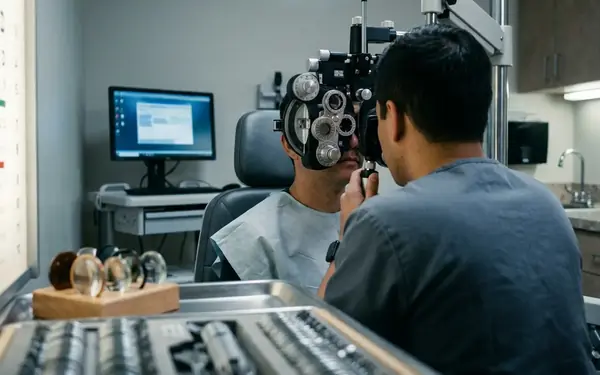
The hardware allowance has limited value if the prescription is outdated. Ordering lenses from an expired or inaccurate prescription can turn a covered purchase into a poor one.
The step-by-step sequence is straightforward:
- Confirm the plan cycle and exam eligibility date.
- Book the eye exam early enough to allow remakes or contact lens follow-up, if needed.
- Ask for a copy of the finalized glasses prescription.
- Confirm whether contact lens fitting fees are separate from the routine exam.
- Apply the remaining allowance before the reset date.
Optimizing Hardware Allocations: Glasses and Contacts
Assign the primary allowance to the highest-cost need
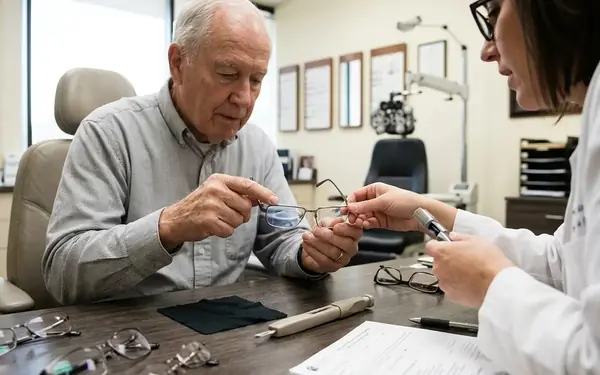
Hardware planning starts with the item the patient will actually use. For many contact lens wearers, that means applying the primary allowance to a six-month supply of daily disposable lenses, then evaluating whether a backup pair of glasses can be purchased with a secondary discount or FSA funds.
For patients who wear glasses all day, the better value may be a durable frame, upgraded lens material, and a coating package that reduces glare and cleaning friction. The correct choice depends on use pattern, not on which item sounds more premium.
Use promotions carefully
End-of-year clinic promotions can help when they stack with insurance allowances, but the details matter. Secondary pair discounts typically cap at about 20% off the retail price when purchased on the same day as the primary exam.
That can work well for prescription sunglasses or computer glasses. It works less well if the patient rushes into a second pair with the same lens design, same use case, and no clear need.
The optician’s job is to compare the final receipt totals, not the promotional headline. A smaller discount on the right lens can outperform a larger discount on eyewear that sits in a drawer.
Out-of-network reimbursement requires patience
Specialized eyewear, boutique frames, safety glasses, or certain lens designs may require out-of-network purchase and reimbursement. Processing windows can span 45 to 60 business days, so this route is poor for anyone expecting quick repayment during the holidays.
Patients should keep the itemized receipt, prescription details, provider information, and claim form together. If the plan requires submission before the year closes, waiting for a credit card statement is not enough.
Integrating Flexible Spending Accounts (FSAs) with Vision Plans
Use FSA dollars for the out-of-pocket layer
Flexible Spending Accounts can cover the portion vision insurance leaves behind: copays, overage amounts, lens upgrades, and eligible prescription eyewear expenses. Patients who need a refresher on the basic account structure can review official Flexible Spending Account (FSA) guidelines.
In practical eyewear planning, FSA funds often fit best after the insurance allowance has been applied. That sequence lets the plan pay its contracted share first, then uses pre-tax dollars for the remaining balance.
Eligible vision expenses to prioritize
Common FSA-eligible vision expenses include prescription glasses, prescription sunglasses, contact lenses, contact lens solution, and medically necessary eye care costs. Lens coatings and upgraded lens materials can also be appropriate when tied to prescription eyewear.
Patients with a remaining balance should avoid spending it on low-value extras simply because the deadline is near. High-index lens materials, anti-reflective coatings, and prescription sunglasses often produce clearer daily value than decorative add-ons.
Deadlines, grace periods, and receipt filing
Many FSA plans require funds to be used by December 31st, though some offer a grace period reported as roughly 2.5 months into the following calendar year, typically ending March 15. Reimbursement claim submission deadlines may be tracked at around 90 days after the plan year’s end.
The final check should be mechanical:
- Verify whether the vision plan uses a calendar-year reset or rolling 365-day cycle.
- Confirm the exact date of the last full eye exam.
- Check remaining frame, lens, contact lens, and FSA balances before choosing eyewear.
- Ask whether contact lens fitting fees are separate from the routine exam.
- Save itemized receipts for FSA reimbursement and out-of-network claims.
Year-end planning works best when patients separate eligibility from preference. First determine what the plan will cover, then decide which eyewear purchase supports daily vision, comfort, and long-term use. The method is not perfect for every plan design, particularly when employer rules add local exceptions, but it reduces the most common avoidable denials before the benefit clock runs out.