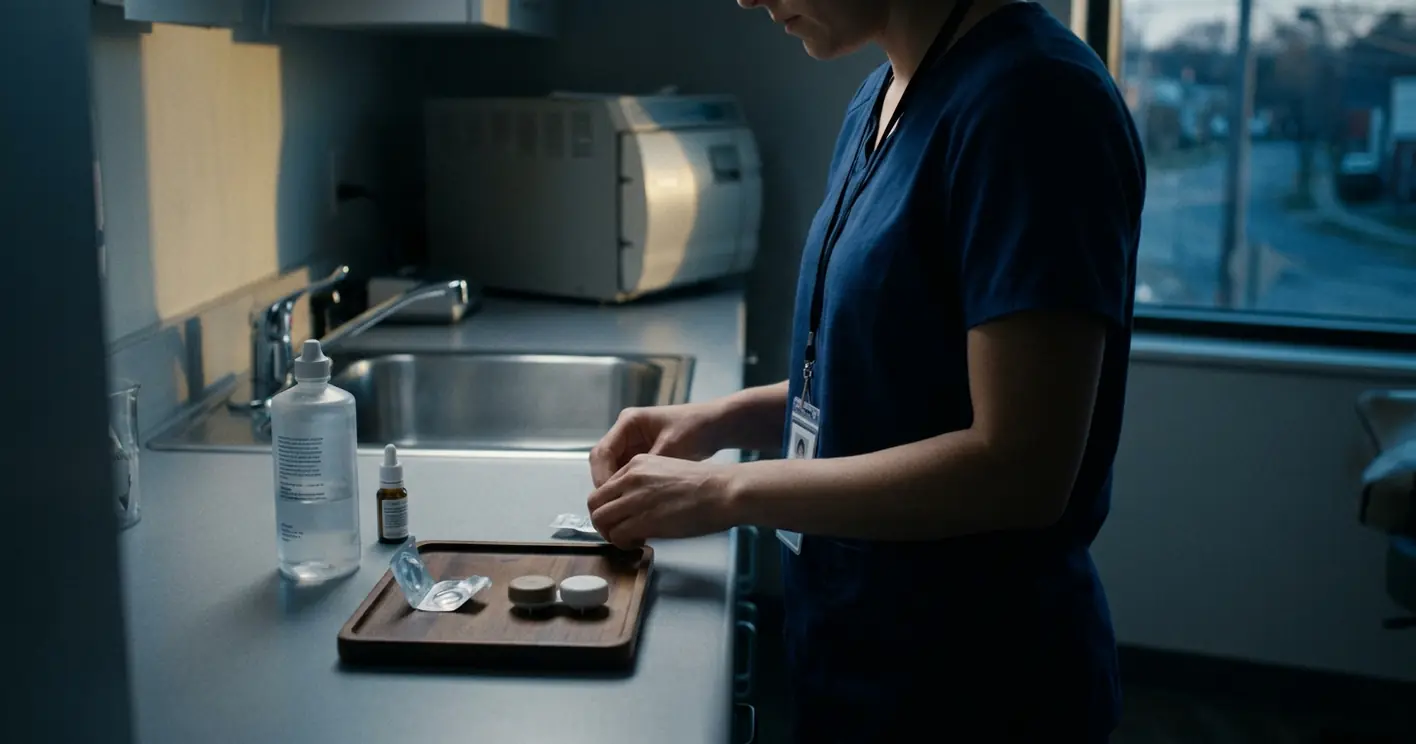
I'm Sarah, and I think understanding why a lens works is just as important as knowing which one to buy. Maintaining your vision requires more than just an updated prescription; it demands proactive care and education. When we talk about contact lens hygiene, we are really talking about managing a delicate biological environment.
The Ocular Microbiome and Lens Contamination Risks
Your eye hosts a complex, balanced microbiome. Placing a piece of manufactured plastic onto the cornea immediately disrupts this environment. Clinical investigators, across multi-center studies, mapped the disruption of tear film stability by utilizing non-invasive tear break-up time (NIBUT) assessments. The results are stark.
Tear film breakup times frequently drop from a baseline of 10 to 12 seconds down to 4 to 6 seconds upon lens insertion. This rapid evaporation stresses the ocular surface.
Almost immediately, the lens becomes a magnet for biological debris. Protein deposition begins within 15 to 20 minutes of initial lens wear. As these proteins denature on the lens surface, they trigger immune responses that can lead to discomfort and reduced visual acuity. Clinical observations confirm that managing this rapid accumulation is the primary goal of any daily hygiene routine.
Analyzing Contact Lens Solutions and Efficacy
Not all liquids are created equal when it comes to lens care. Initially, some practitioners considered recommending sterile saline as a primary rinse-and-store medium to avoid chemical sensitivity in patients. However, after observing rapid biofilm proliferation—a lesson that shifted industry standards entirely, saline is now strictly relegated to rinsing, never disinfecting.
Today, patients generally choose between two proven systems: multipurpose solutions and hydrogen peroxide.
Multipurpose solutions utilize dual disinfectants in concentrations reported as roughly 0.0001% to balance pathogen lethality with corneal epithelial safety. They are convenient but require diligent mechanical rubbing to be fully effective.
Hydrogen peroxide systems operate differently. They require a strict neutralization phase lasting 6 to 8 hours, facilitated by a platinum-coated disc built into the case. If you remove the lens before neutralization is complete, the active peroxide will cause severe chemical burns to the cornea. Yet, for patients with specific sensitivities, the preservative-free result is unmatched.
Step-by-Step Mechanical Cleaning Protocols
The "no-rub" label on many solution bottles is one of the most misunderstood marketing terms in eye care. The necessity of mechanical friction was validated when electron microscopy revealed that chemical soaking alone left up to a third of tightly bound lysozyme deposits intact. This prompted the universal return to the rub-and-rinse protocol.
Before touching your eyes, wash your hands with a non-moisturizing soap. Moisturizers transfer lipids directly to the lens surface, permanently clouding your vision.
Critical Insight: Mechanical cleaning requires 15 to 20 seconds of gentle lateral rubbing per side. Fingertip pressure should not exceed the force used to lightly touch a closed eyelid, preventing radial micro-tears in the silicone hydrogel matrix.
Always rub in a straight line. Circular rubbing motions increase the risk of tearing the delicate lens edges.
Proper Storage and Case Maintenance
Your contact lens case is often the dirtiest piece of equipment in your bathroom. Even with perfect lens handling, a contaminated case will reinfect a clean lens every single night.
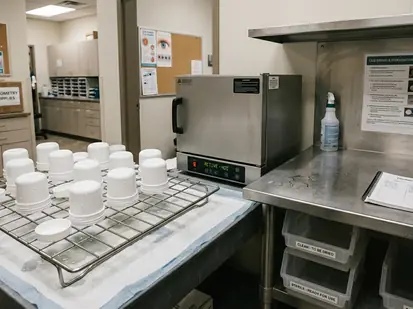
To determine the optimal drying method, researchers evaluated face-up versus face-down case positioning. They concluded that face-down drying on a clean tissue minimizes airborne particulate settling. Air-drying requires a minimum of 4 to 6 hours in a well-ventilated environment outside the bathroom, where humidity and aerosolized bacteria are highest.
Risk Factor: Acanthamoeba keratitis can develop despite daily multipurpose solution use due to microscopic tap water exposure during case rinsing. Never let tap water touch your lenses or your case.
Furthermore, lens cases must be replaced every 30 to 90 days to prevent irreversible biofilm embedding in the plastic. If you buy a new bottle of solution, throw away your old case.
Scope and Limitations of Lens Maintenance
No amount of cleaning can reverse the physical degradation of an overworn lens. Optometrists established strict replacement schedules after longitudinal studies demonstrated that oxygen transmissibility degrades steadily after the prescribed wear period, regardless of the cleaning regimen.
Oxygen permeability (Dk/t) in monthly lenses drops measurably after 28 to 32 days of continuous daily wear. Pushing a monthly lens to six weeks starves the cornea of oxygen, leading to hypoxic stress and neovascularization.
Your individual biology also dictates your cleaning limits. Tear film lipid composition varies heavily by diet and meibomian gland health, altering whether a patient requires a heavy-surfactant multipurpose solution or a purely oxidative hydrogen peroxide system. Hydrogen peroxide systems lack the mechanical surfactant action needed to strip heavy lipid deposits, requiring a separate daily cleaner for patients with high-lipid tear profiles.
Skipping steps has real consequences. Acanthamoeba cyst survival in standard non-peroxide multipurpose environments has been reported as roughly 24 hours if the mechanical rub step is skipped.
Clinical Guidelines for Complication Prevention
Even with meticulous care, complications can arise. Diagnostic protocols for contact lens-induced acute red eye (CLARE) were refined by tracking patient symptom timelines, leading to the recommendation that any discomfort persisting after lens removal requires immediate clinical evaluation.
In clinical practice, we advise patients to seek care within 12 to 24 hours of the onset of severe photophobia or localized corneal pain. Waiting over the weekend is never an option. Corneal infiltrates can develop within 48 to 72 hours if a compromised lens continues to be worn over an epithelial micro-abrasion.
Recommendation: Follow the Centers for Disease Control and Prevention guidelines on contact lens hygiene and integrate this daily checklist into your routine:
- Wash hands with non-moisturizing soap for 20 seconds.
- Dry hands with a lint-free towel before every handling.
- Rub the lens laterally with solution for 15-20 seconds per side.
- Rinse thoroughly with a steady stream of solution.
- Store in a clean case with fresh solution—never top off old liquid.
While these hygiene protocols significantly reduce infection rates, individual tear film chemistry means no regimen offers absolute immunity. Listen to your eyes. If they are red, painful, or sensitive to light, take the lenses out and call your doctor.