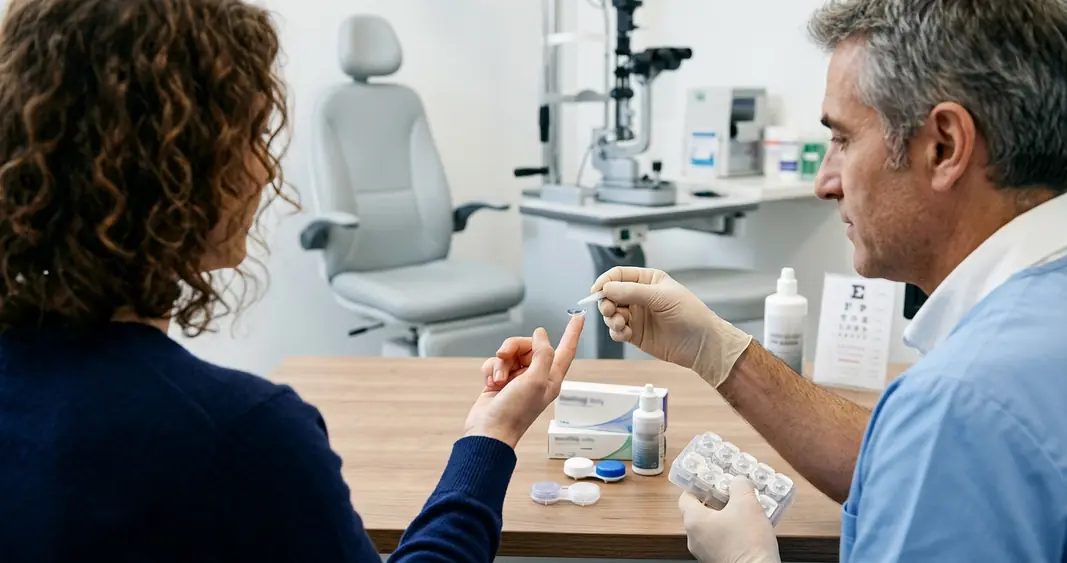
Understanding why a contact lens works is just as important as knowing which one to buy. In my clinical practice, patients often view the choice between daily and monthly contact lenses as a simple matter of pricing. The reality involves a complex mix of material science, tear film dynamics, and personal hygiene habits.
The Evolution of Soft Contact Lenses
Clinical researchers determined the shift to frequent replacement by tracking polymer degradation in annual lenses. Follow-up assessments showed that structural integrity compromised predictably regardless of the patient's care routine. In those evaluations, patients experienced 8 to 11 months of continuous daily wear before structural failure occurred.
Early hydrogel iterations showed thickness variations reported as roughly 0.03mm to 0.05mm. These microscopic inconsistencies directly impacted comfort and visual acuity. Modern manufacturing eventually enabled the daily disposable model by stabilizing these thickness profiles across millions of single-use molds.
Material Science and Oxygen Permeability
Material scientists balanced the hydrophobic nature of silicone with hydrophilic monomers to create modern lenses. They adjusted the matrix iteratively to achieve high oxygen transmissibility without increasing the modulus to an uncomfortable stiffness. This material approach protects corneal health during long hours of wear.
Longitudinal data shows oxygen transmissibility (Dk/t) ranges of 85 to 125 units for current silicone hydrogels. Center thickness profiles sit tightly between 0.07mm and 0.09mm—a precise balance between durability and breathability. Daily lenses often lean toward the thinner end of this spectrum, relying on their single-use nature to bypass the need for long-term structural resilience.
Daily Disposables: Clinical Advantages and Hygiene
Initial development phases explored applying anti-lipid coatings to monthly lenses to reduce papillary conjunctivitis. This approach was discarded when clinical evaluations revealed that coating degradation often happened within 12 to 14 days. Lipid deposition onset can begin within 4 to 6 hours of wear.
Discarding the lens daily bypasses this accumulation entirely. It eliminates the need for lens care solutions, which reduces toxic or allergic reactions to preservatives.
Critical Insight: A fresh lens every morning is the most effective defense against contact lens-induced papillary conjunctivitis (CLPC).
Proper hygiene remains mandatory even with single-use lenses. The Centers for Disease Control and Prevention (CDC) data on contact lens hygiene highlights that water exposure and improper handwashing still pose severe risks to daily wearers.
Monthly Lenses: Durability and Maintenance Protocols
Optometrists established modern maintenance protocols by comparing biofilm disruption rates. Mechanical friction combined with chemical soaking is mandatory to prevent microbial keratitis. Approved cleaning protocols require strict adherence.
Hydrogen peroxide neutralization cycles typically require 6 to 8 hours to achieve sterility. For patients using multipurpose solutions, mechanical rubbing durations should reach 15 to 20 seconds per lens surface. Skipping this step allows proteins to denature and bind permanently to the lens matrix.
Environmental factors heavily influence the lifespan of a reusable lens. We frequently see monthly lenses failing prematurely and requiring disposal at 18 to 22 days due to heavy seasonal pollen adhering to the silicone matrix.
Risk Factor: Topping off old solution instead of using fresh liquid reduces the antimicrobial efficacy of your storage case, creating a breeding ground for bacteria.
Economic Comparison: Cost vs. Convenience
Health economists calculated the cost-benefit threshold by aggregating the unit price of daily blisters against the base cost of monthly lenses plus the required volume of multipurpose solution consumed. Solution consumption is reported as roughly 12 to 14 ounces per 90-day period.
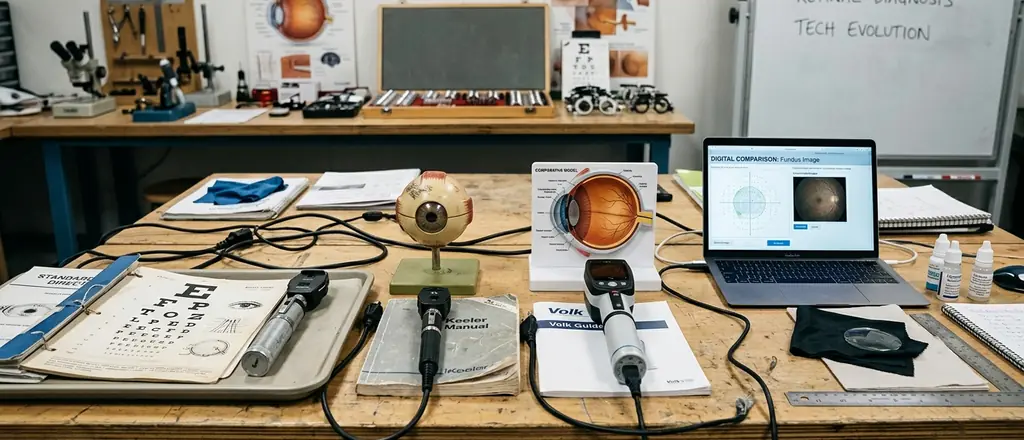
The break-even point is reported as roughly 3 to 4 days per week. Patients wearing lenses exclusively on weekends save money with daily disposables. Full-time wearers generally find monthly lenses more economical upfront, though this calculation rarely accounts for the hidden costs of non-compliance or potential medical treatments for infections.
Clinical Comparison: Daily vs. Monthly Modalities
| Clinical Factor | Daily Disposables | Monthly Lenses |
|---|---|---|
| Deposit Accumulation | Negligible (discarded daily) | Moderate to High (requires mechanical disruption) |
| Oxygen Permeability (Dk/t) | Typically 85 - 100 units | Typically 100 - 125 units |
| Maintenance Burden | None | Daily rubbing and 6-8 hour soaking |
Clinical Limitations and Prescription Scope
Manufacturers restricted the daily disposable toric parameters to the central bell curve of patient needs. They prioritized high-volume prescriptions to offset the tooling costs of single-use molds. Astigmatism cylinder caps often range from -2.25D to -2.75D for standard daily lines. Base curve options are usually limited to 1 or 2 radii per daily brand.
While daily disposables offer peak convenience, high-cylinder astigmatism exceeding -2.75D generally restricts patients to monthly or custom rigid modalities, as daily disposable molds are rarely manufactured for extreme toric parameters. A perfect fit is not guaranteed for every prescription in a daily format.
Certain complex corneal topographies require custom monthly or rigid gas permeable lenses to achieve functional vision. Environmental impact considerations regarding daily plastic waste also drive some patients toward reusable modalities, though recycling programs for blister packs are expanding.
Selecting the Optimal Modality for Your Lifestyle
During protocol evaluations, practitioners finalize the modality recommendation through a diagnostic fitting tree. We evaluate the patient's tear film break-up time alongside their self-reported exposure to environmental desiccants. Diagnostic trial periods usually last 5 to 7 days.
Tear film break-up times under about 10 seconds prompt daily disposable recommendations. Tear film evaporation rates vary significantly, causing a daily lens to perform optimally in a humid outdoor setting but desiccate rapidly in a climate-controlled office with 18% to 24% ambient humidity.
Recommendation: Track your comfort levels during the final three hours of your day. If vision blurs or lenses feel gritty consistently after 5:00 PM, your current modality or material may be incompatible with your tear chemistry.
Consultation protocols with an optometrist finalize the fitting. We assess the physical fit on the cornea, the visual acuity achieved, and your honest assessment of your own compliance levels with hygiene routines.